Read across five tongues.
Short articles and everyday conversations — Arabic fully vowelled, Japanese with furigana — each with Thai sentence translations, tap-a-word glosses, and recorded narration where you see the audio badge.
1000 conversations · page 29 of 42
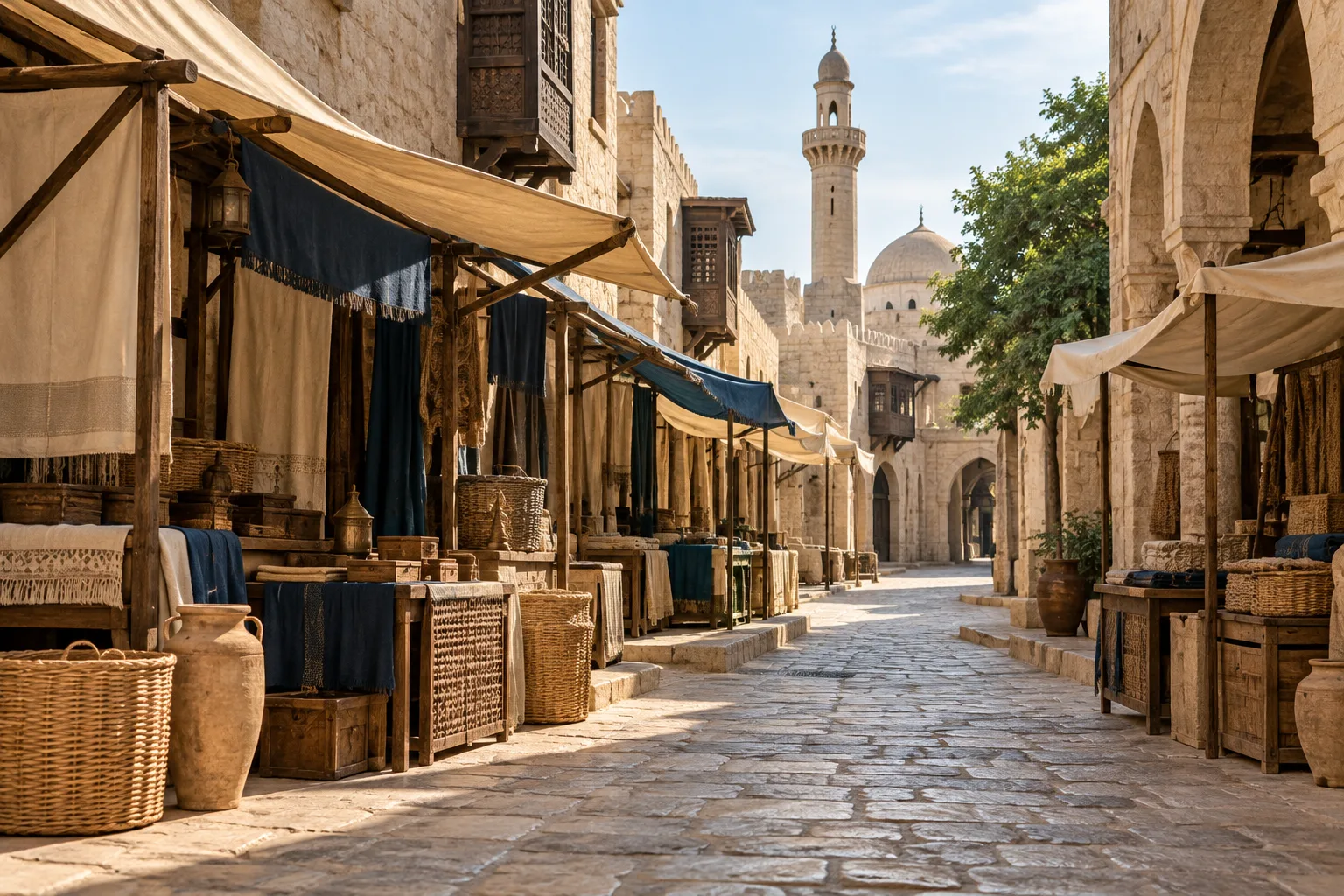
الْبِنْيَةُ الِاجْتِمَاعِيَّةُ لِلْمَدِينَةِ الْإِسْلَامِيَّةِ الْكلاسِيكِيَّةِ
Two urban historians analyse the organisational principles—mosque, suq, hammam, khan—that defined the classical Islamic city.
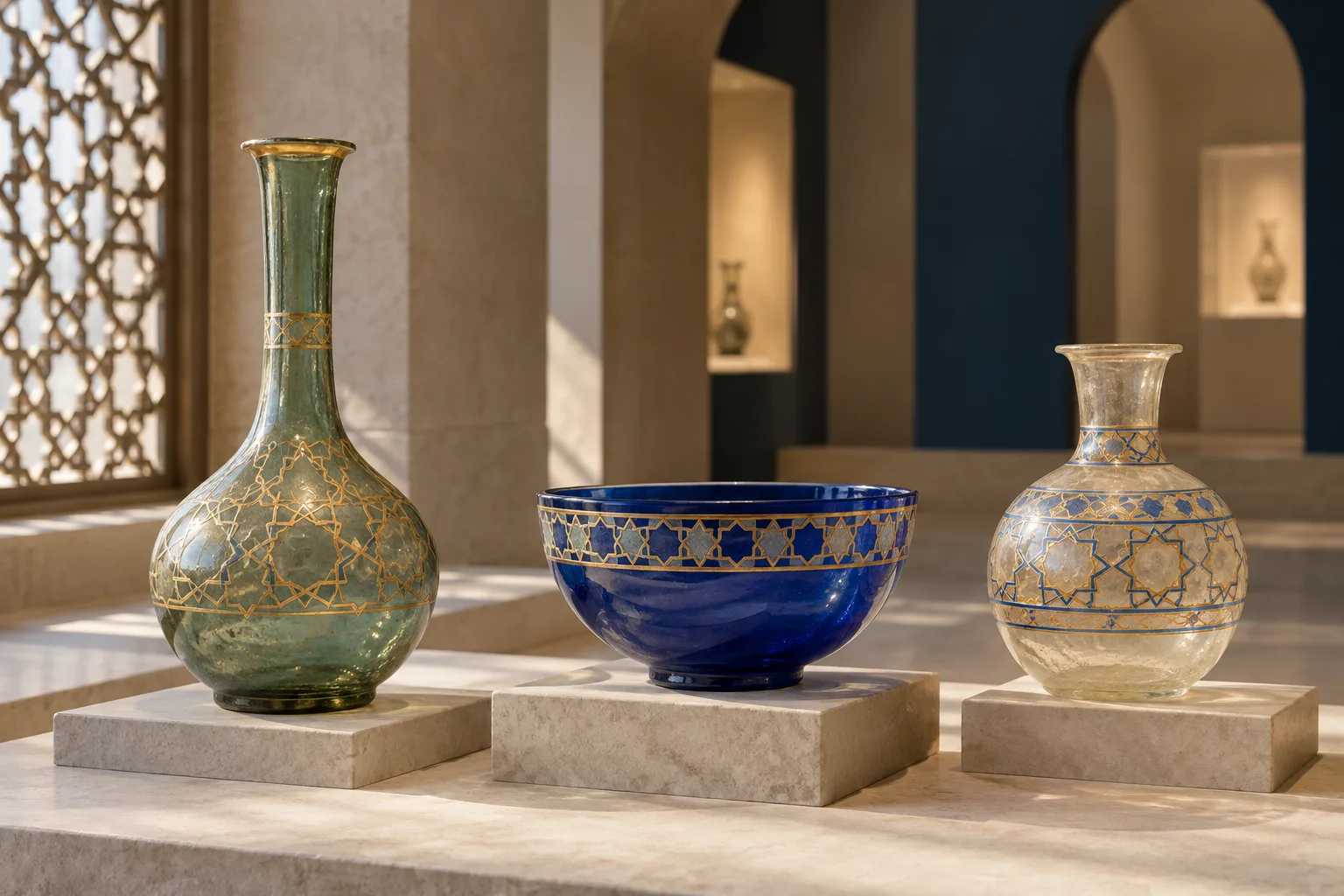
الصِّنَاعَاتُ الزُّجَاجِيَّةُ الْإِسْلَامِيَّةُ وَحِرَفُ الطِّرَازِ
Two museum curators discuss the global significance of Islamic glassmaking and textile craftsmanship during the Abbasid and Fatimid periods.
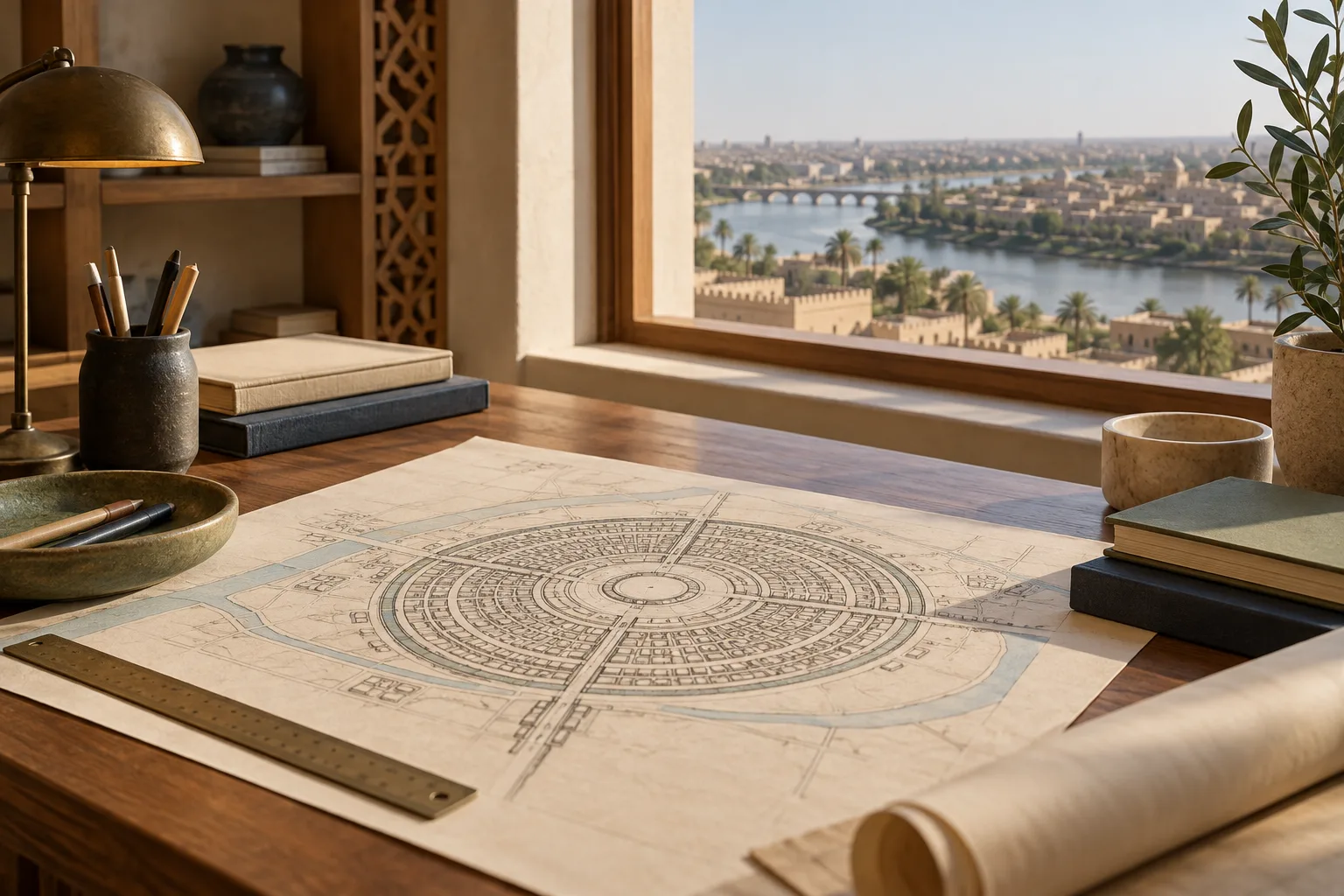
الْخِطَطُ الْعُمْرَانِيَّةُ لِبَغْدَادَ الْمُدَوَّرَةِ
A teacher and student explore the unique circular urban plan of Abbasid Baghdad and its administrative genius.
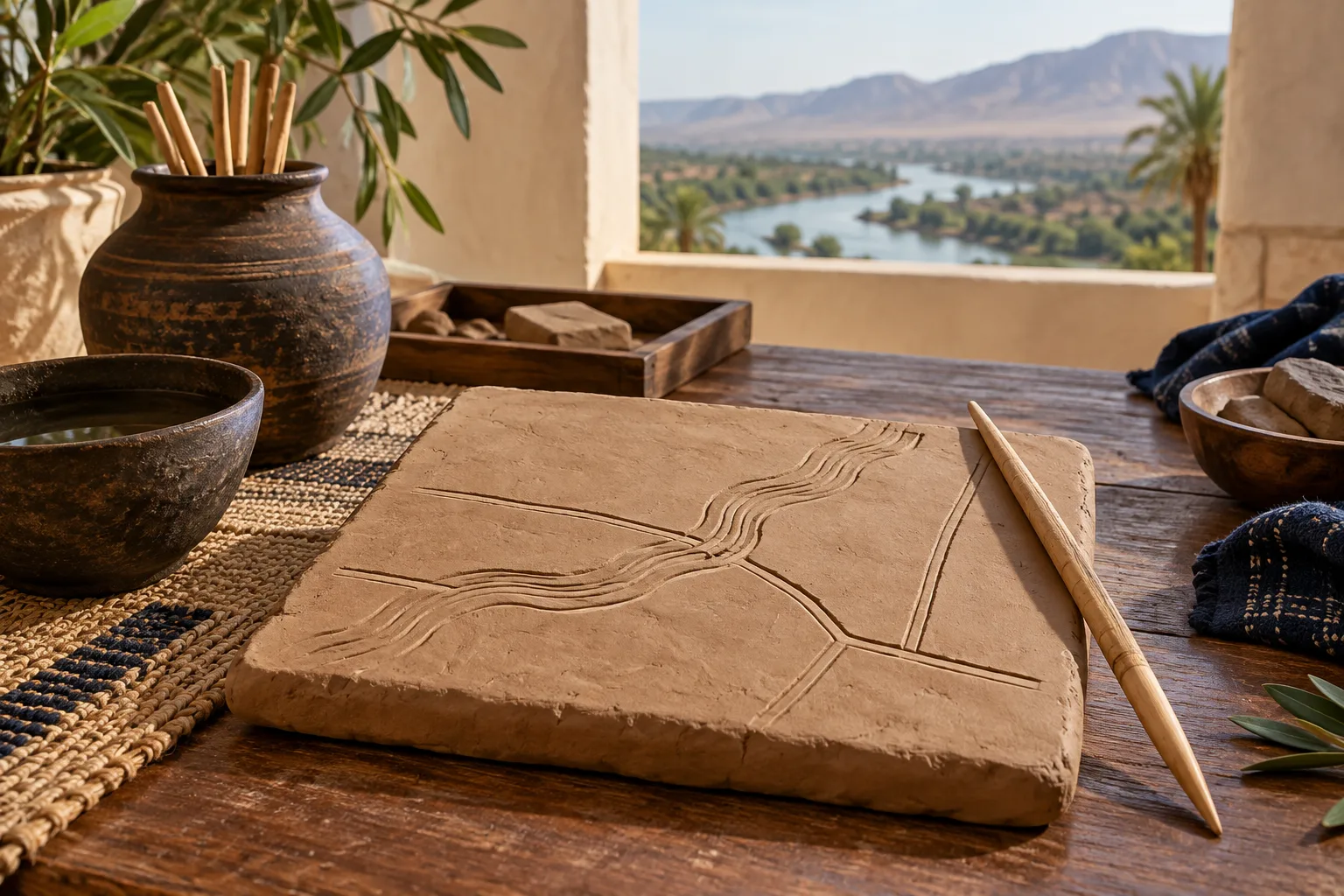
تَارِيخُ الْخَرَائِطِ وَرَسْمِ الْجُغْرَافِيَا
A student asks a teacher about who made the first maps and why, learning about early Islamic and ancient cartography.
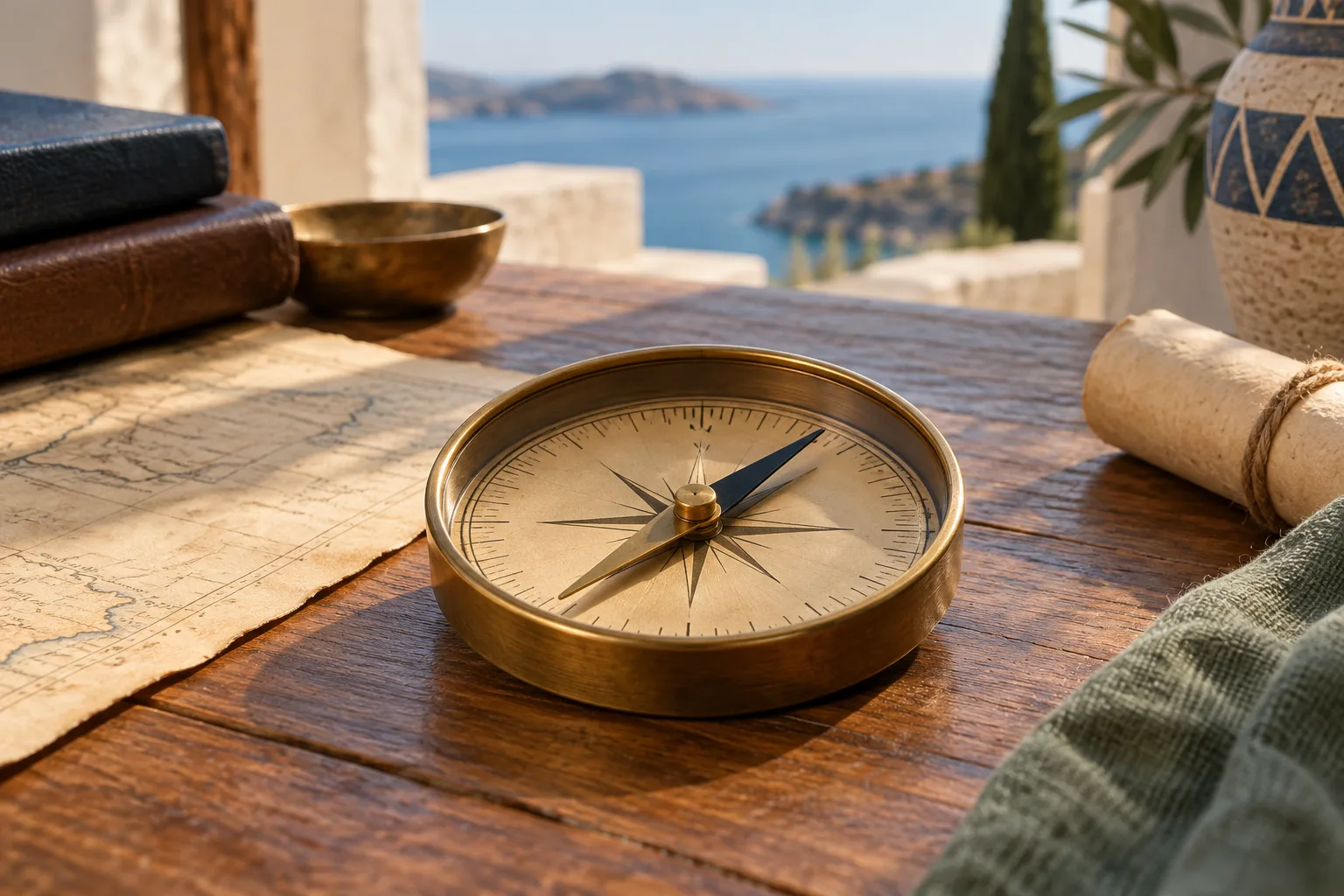
اخْتِرَاعُ الْبَوْصَلَةِ وَاسْتِخْدَامُهَا
Two friends discuss the invention of the compass, its origins in China, and how it helped sailors navigate the seas.
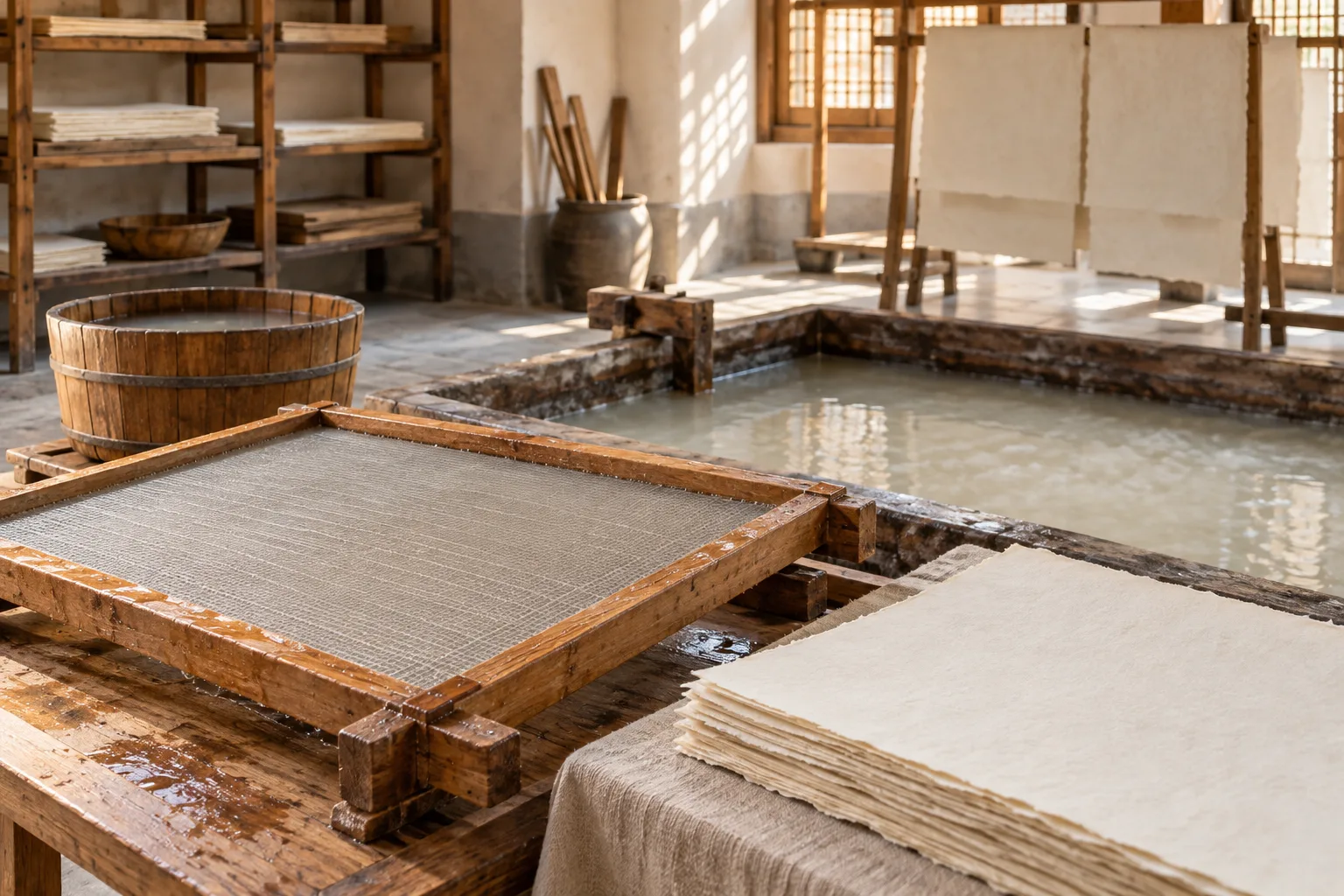
كَيْفَ انْتَشَرَ الْوَرَقُ فِي الْعَالَمِ
A child asks their parent about the history of paper, discovering how it moved from China through the Islamic world to Europe.
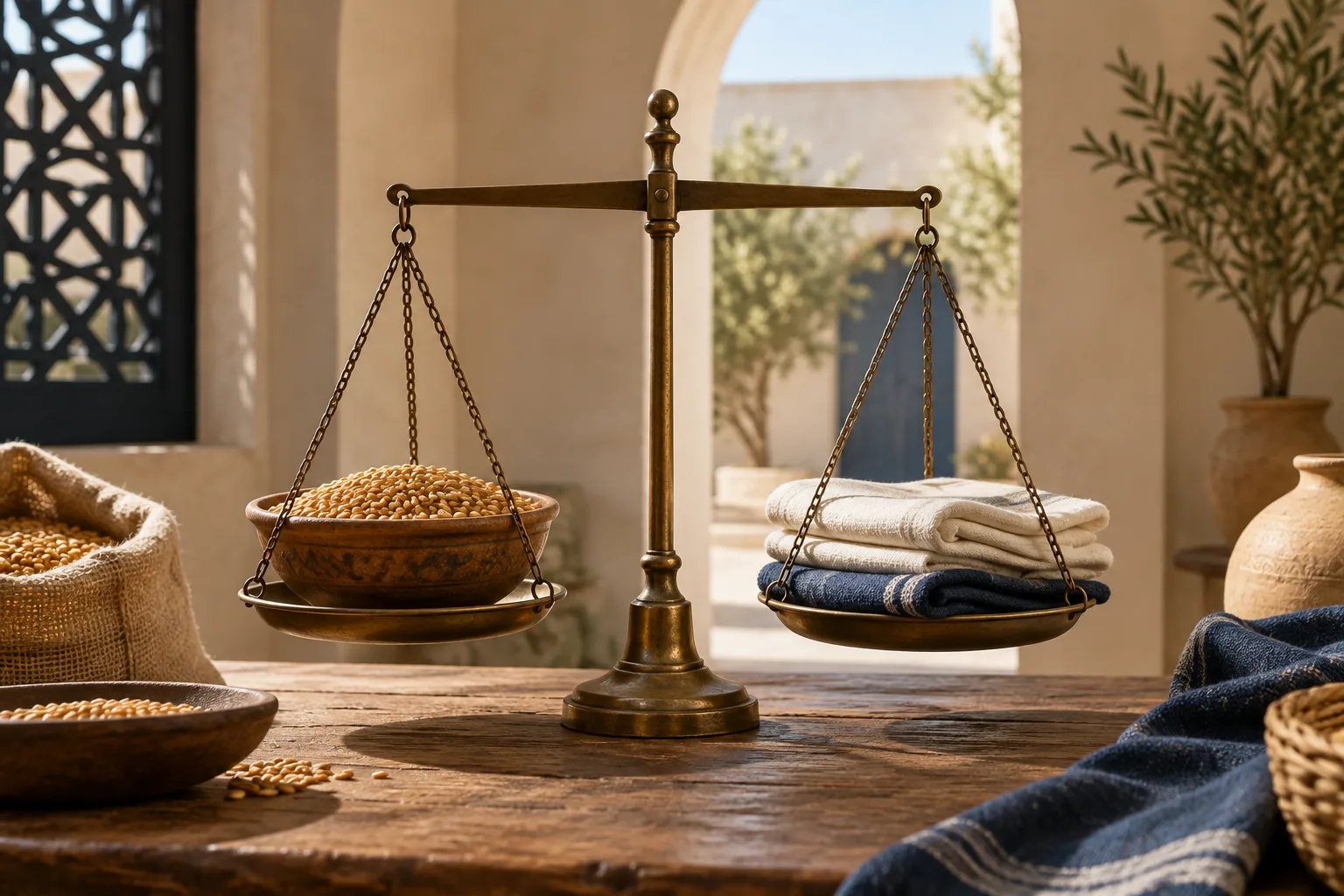
قِصَّةُ النُّقُودِ وَالْعُمْلَةِ عَبْرَ التَّارِيخِ
Two students explore how coins were first made, why people needed money, and the role of Islamic gold dinars in trade.
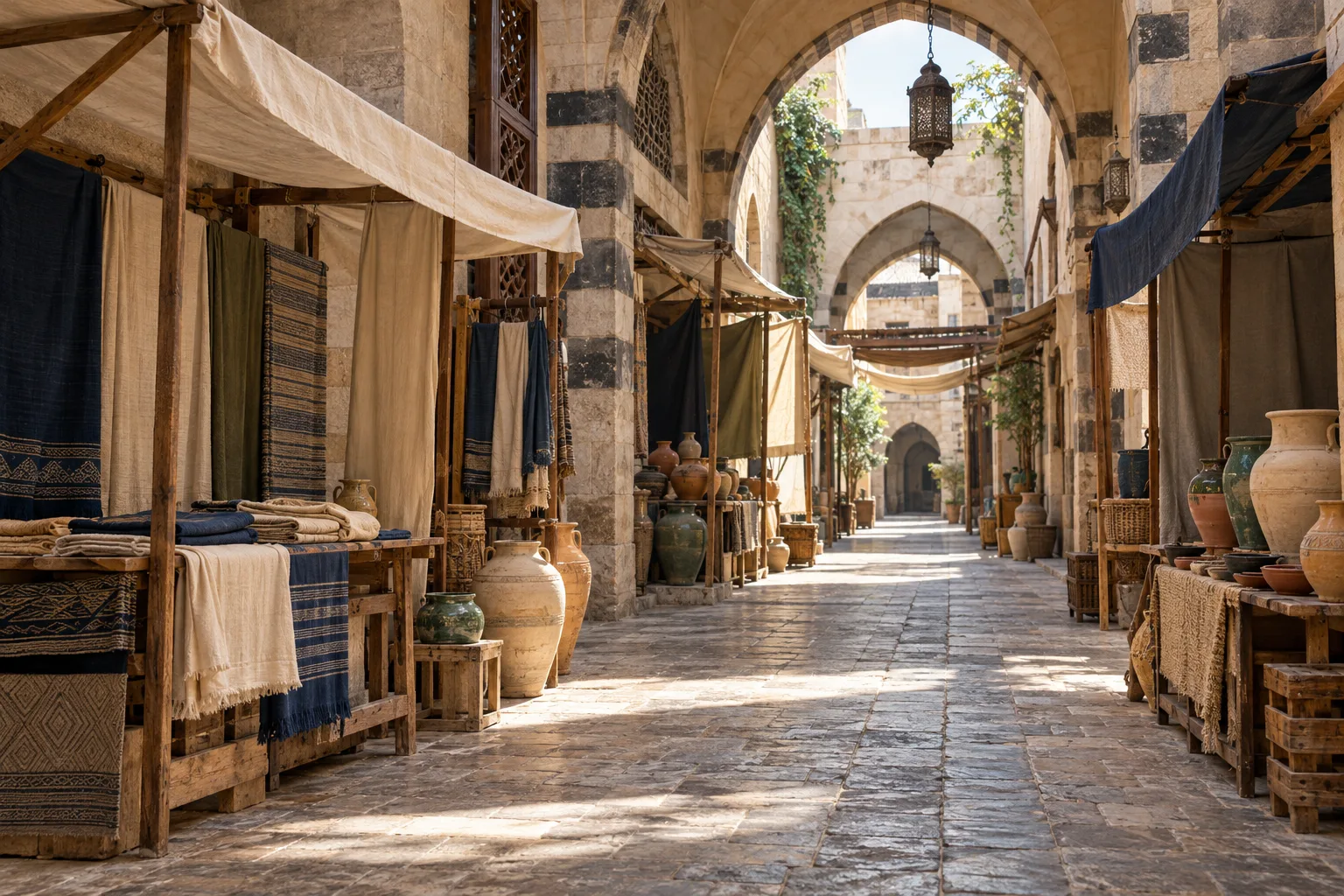
مُدُنُ التِّجَارَةِ الْقَدِيمَةُ: دِمَشْقُ
A visitor and a local guide discuss Damascus as one of the world's oldest continuously inhabited cities and its role in ancient trade.
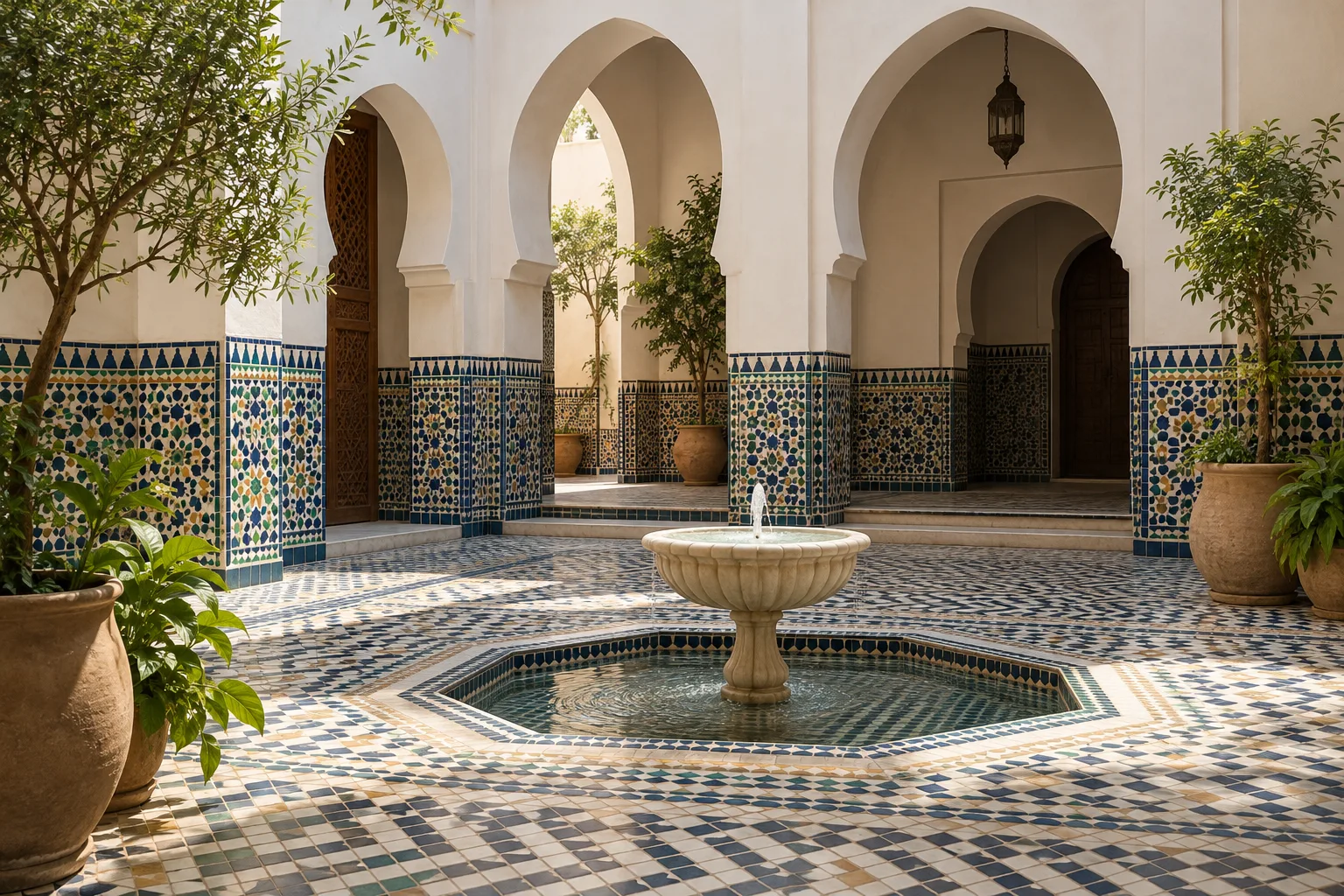
مُدُنُ التِّجَارَةِ الْقَدِيمَةُ: فَاسُ
A history student and a professor discuss the founding of Fez by Idris I, its role as a centre of Islamic learning and craft, and the famous Al-Qarawiyyin university.
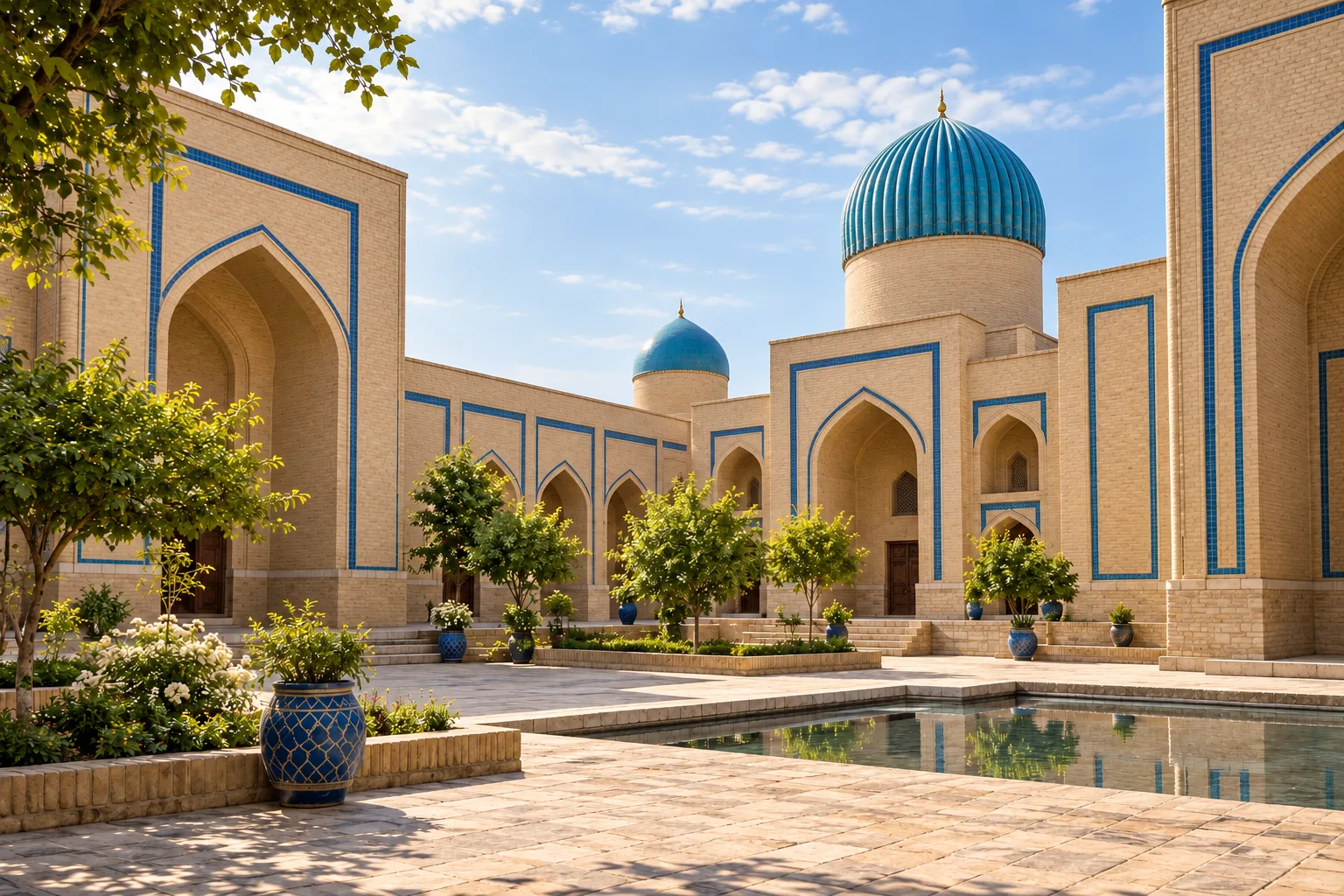
مُدُنُ التِّجَارَةِ الْقَدِيمَةُ: سَمَرْقَنْدُ
Two scholars discuss Samarkand's position on the Silk Road, its golden age under Timur, and its legacy in science and architecture.
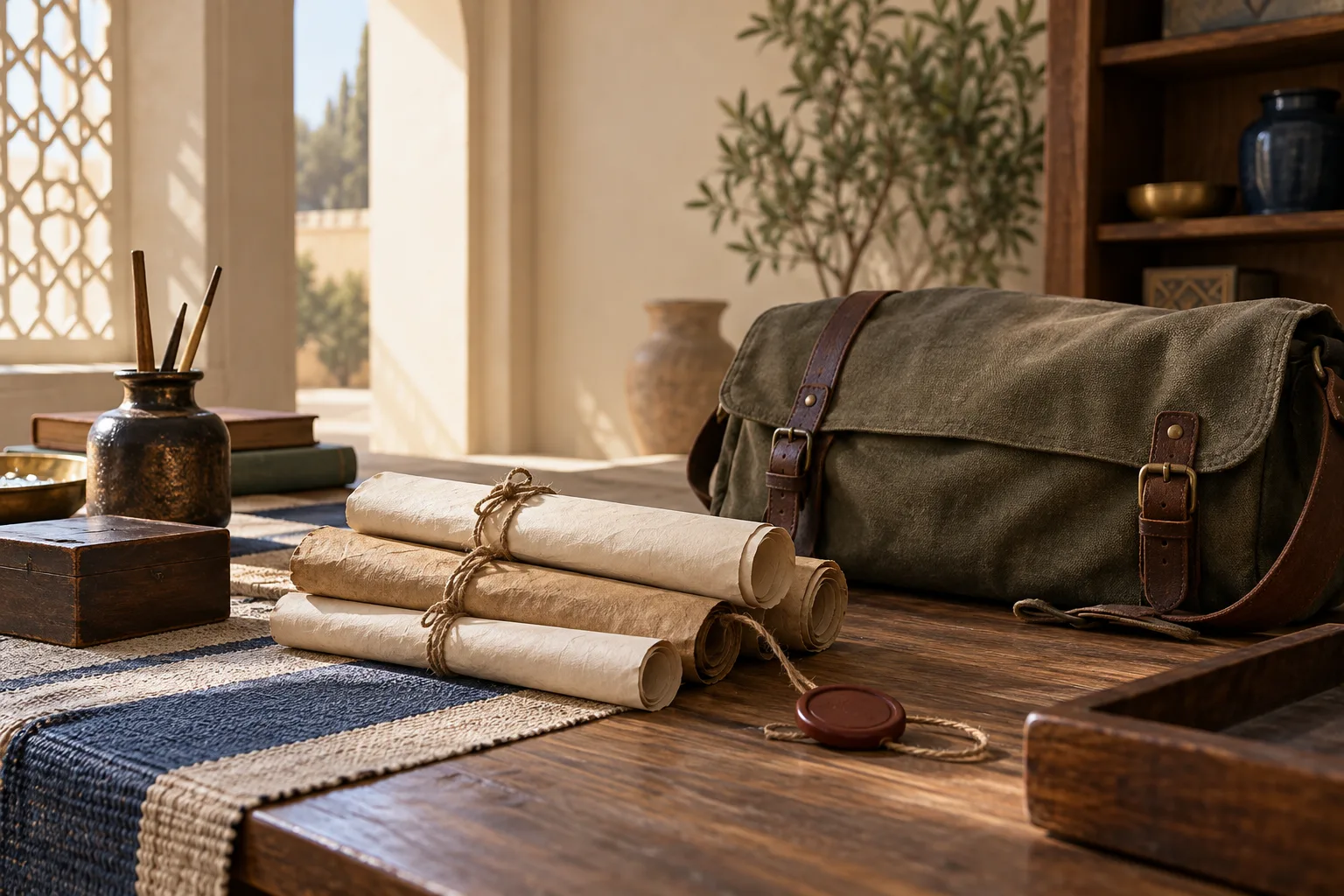
نِظَامُ الْبَرِيدِ وَالرُّسُلِ عَبْرَ التَّارِيخِ
A librarian and a curious visitor discuss the history of postal systems from ancient Persia and the Islamic caliphate to the modern era.
التَّقَاوِيمُ وَحِسَابُ الزَّمَنِ عَبْرَ الْعُصُورِ
Two students explore how different civilisations devised calendars, comparing lunar and solar systems and discussing the Islamic Hijri calendar.
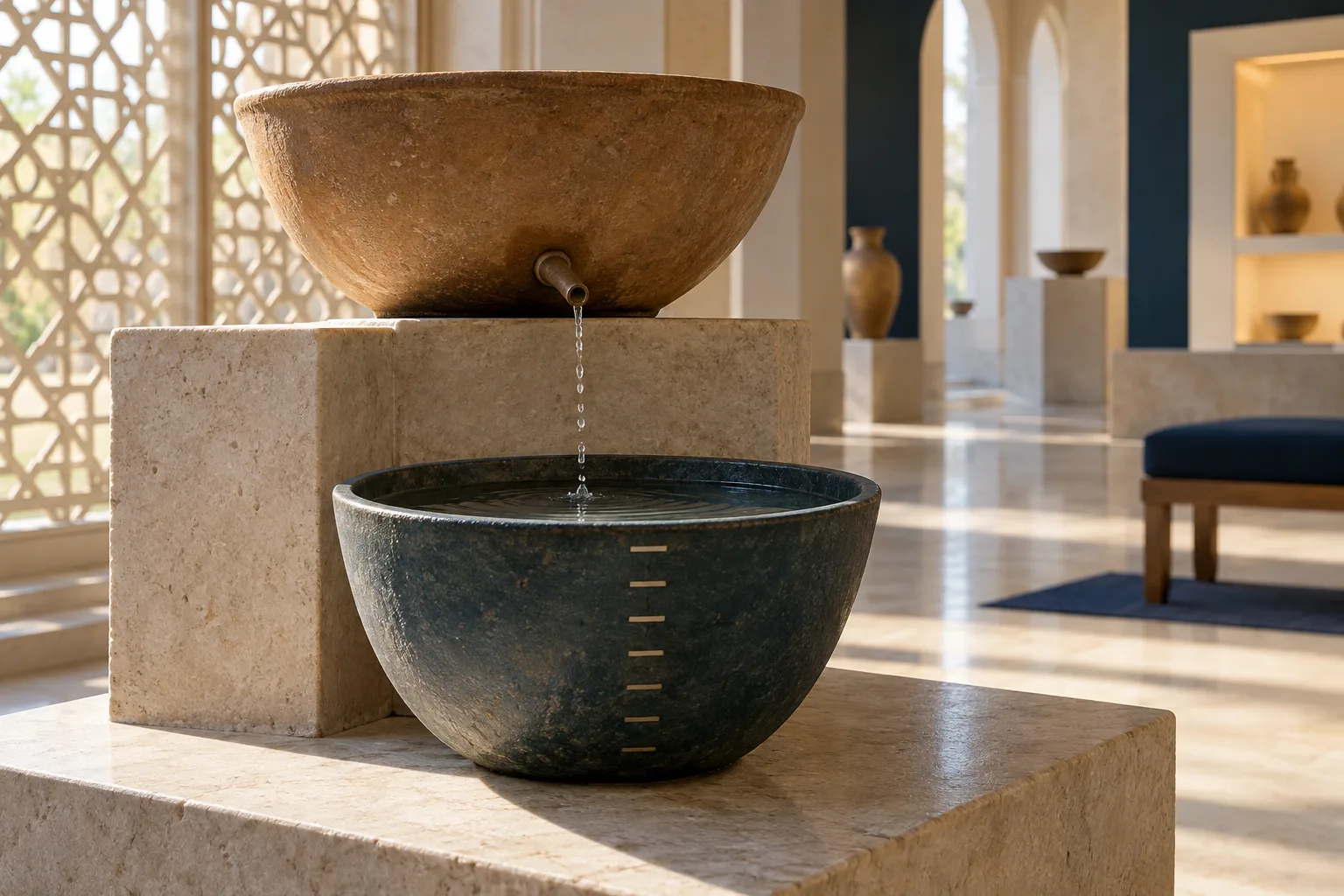
السَّاعَاتُ الْمَائِيَّةُ وَأَدَوَاتُ قِيَاسِ الزَّمَنِ الْأُولَى
A museum guide explains to a visitor the ingenious ancient devices used to measure time, including water clocks, sundials, and the famous mechanical clock of Al-Jazari.
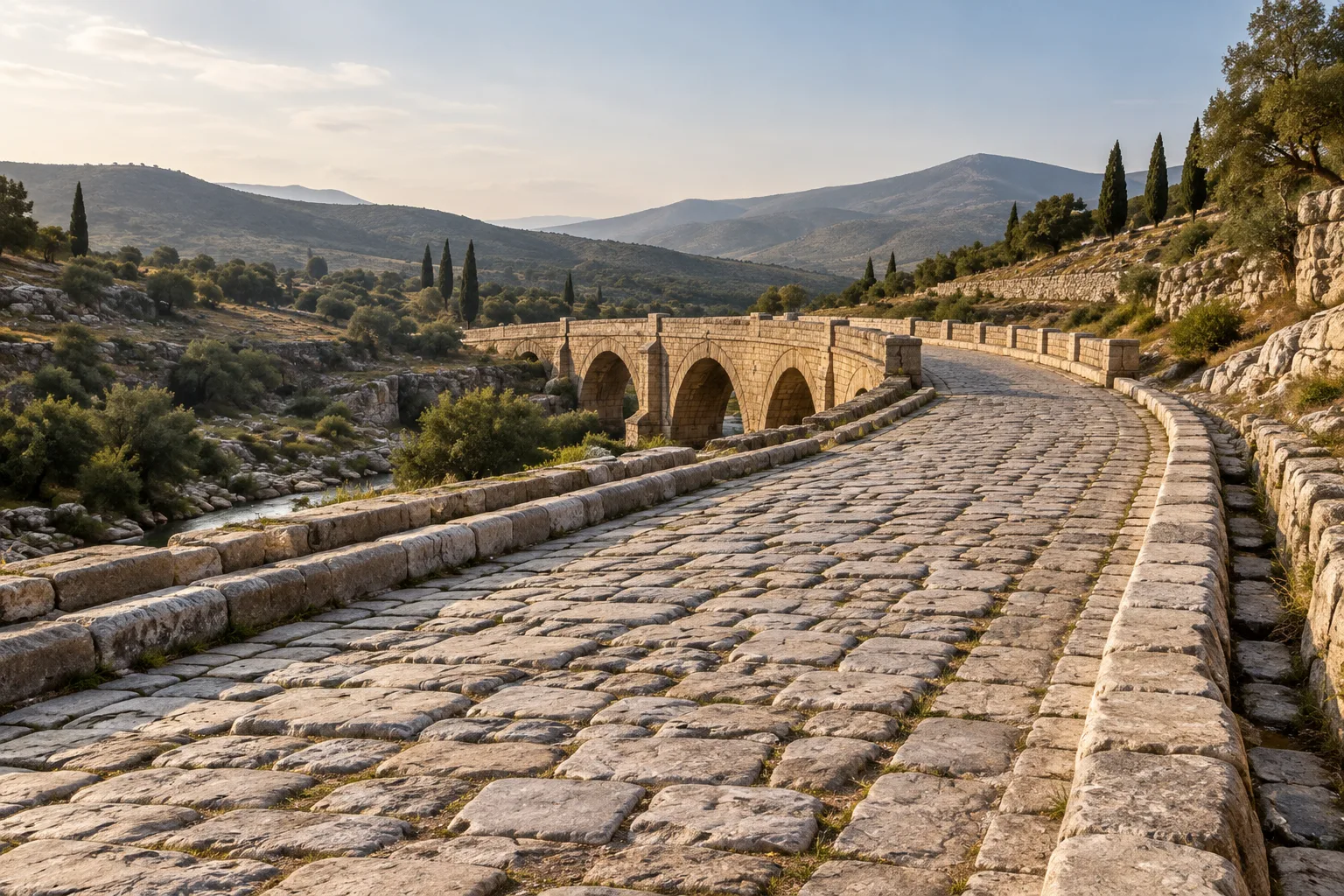
بِنَاءُ الْجُسُورِ وَالطُّرُقِ فِي الْحَضَارَاتِ الْقَدِيمَةِ
A professor and a graduate student discuss the engineering of ancient roads and bridges, from Roman roads to Mughal and Abbasid construction projects.
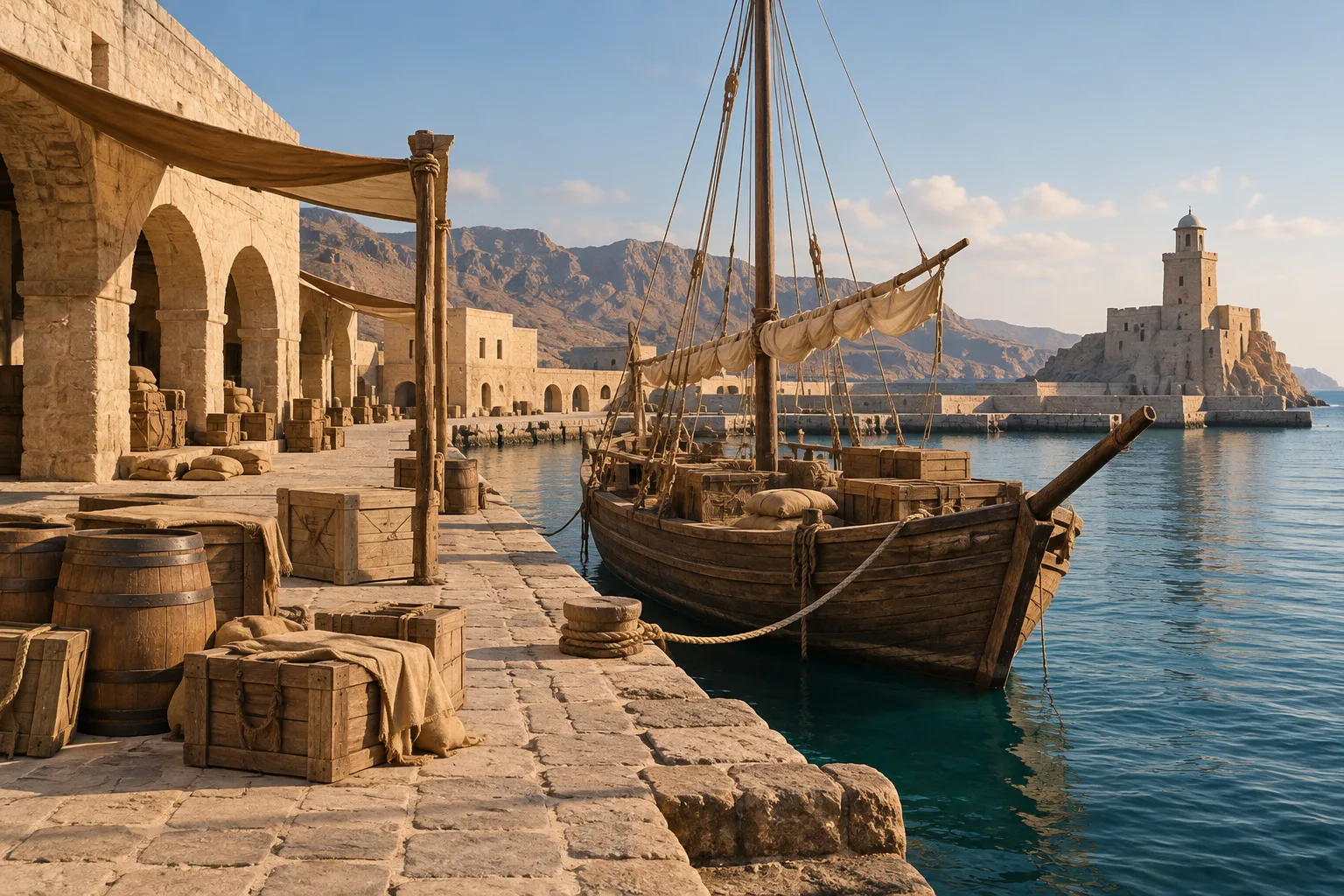
الْمَوَانِئُ وَالْمَرَاسِي فِي التَّارِيخِ
Two historians debate the strategic and economic roles of great historical harbours, including Alexandria, Hormuz, Calicut, and Aden in connecting maritime trade networks.
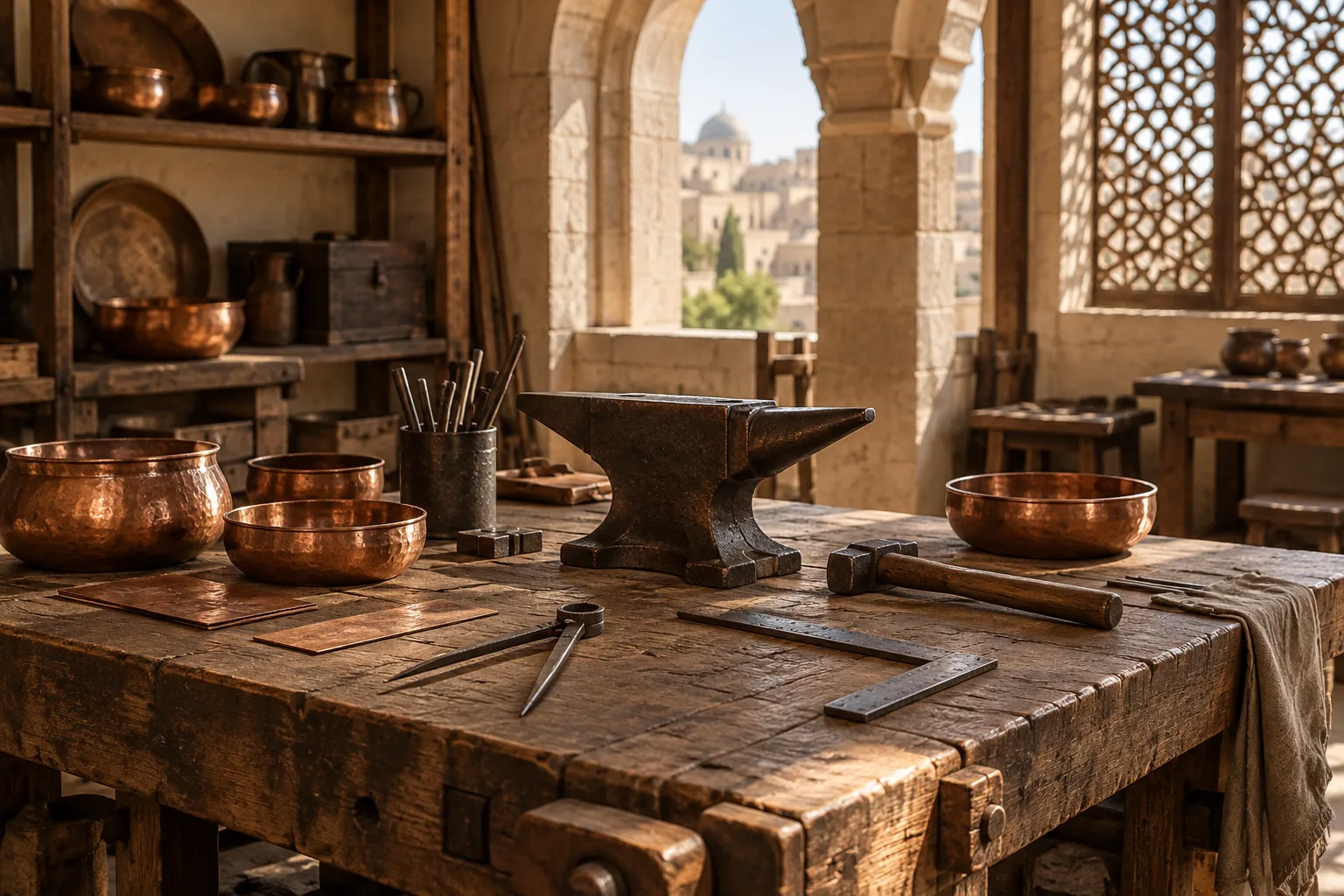
الطَّوَائِفُ الْحِرَفِيَّةُ وَالصِّنَاعَاتُ فِي مُدُنِ الْعُصُورِ الْوُسْطَى
Two researchers discuss the structure and social role of craft guilds in Islamic and European medieval cities, comparing the Islamic ḥisba system with the European guild model.
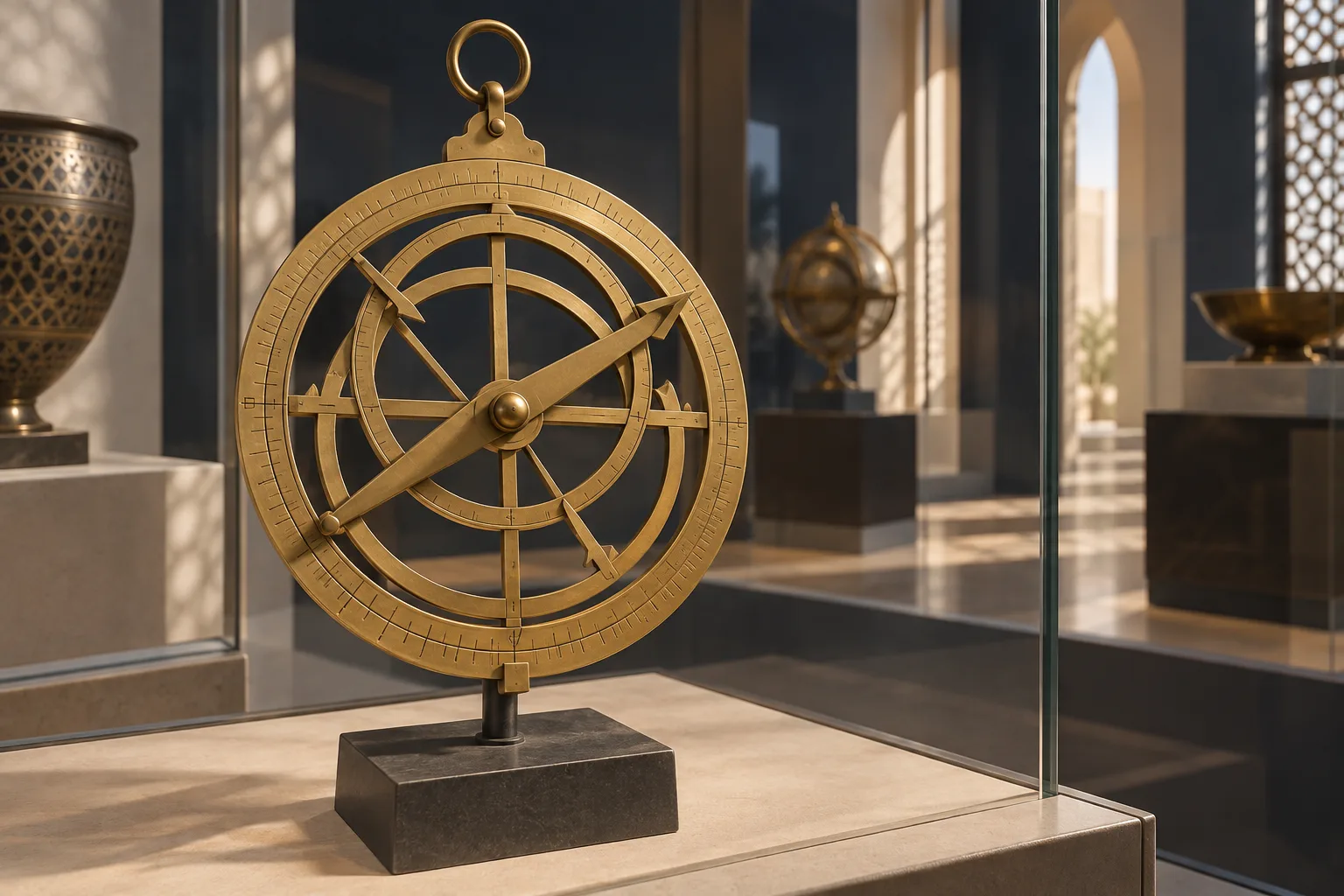
تَارِيخُ الْإِسْطَرْلَابِ
A student and a historian discuss the invention and use of the astrolabe, the remarkable astronomical instrument perfected by Muslim scholars in the Islamic Golden Age.
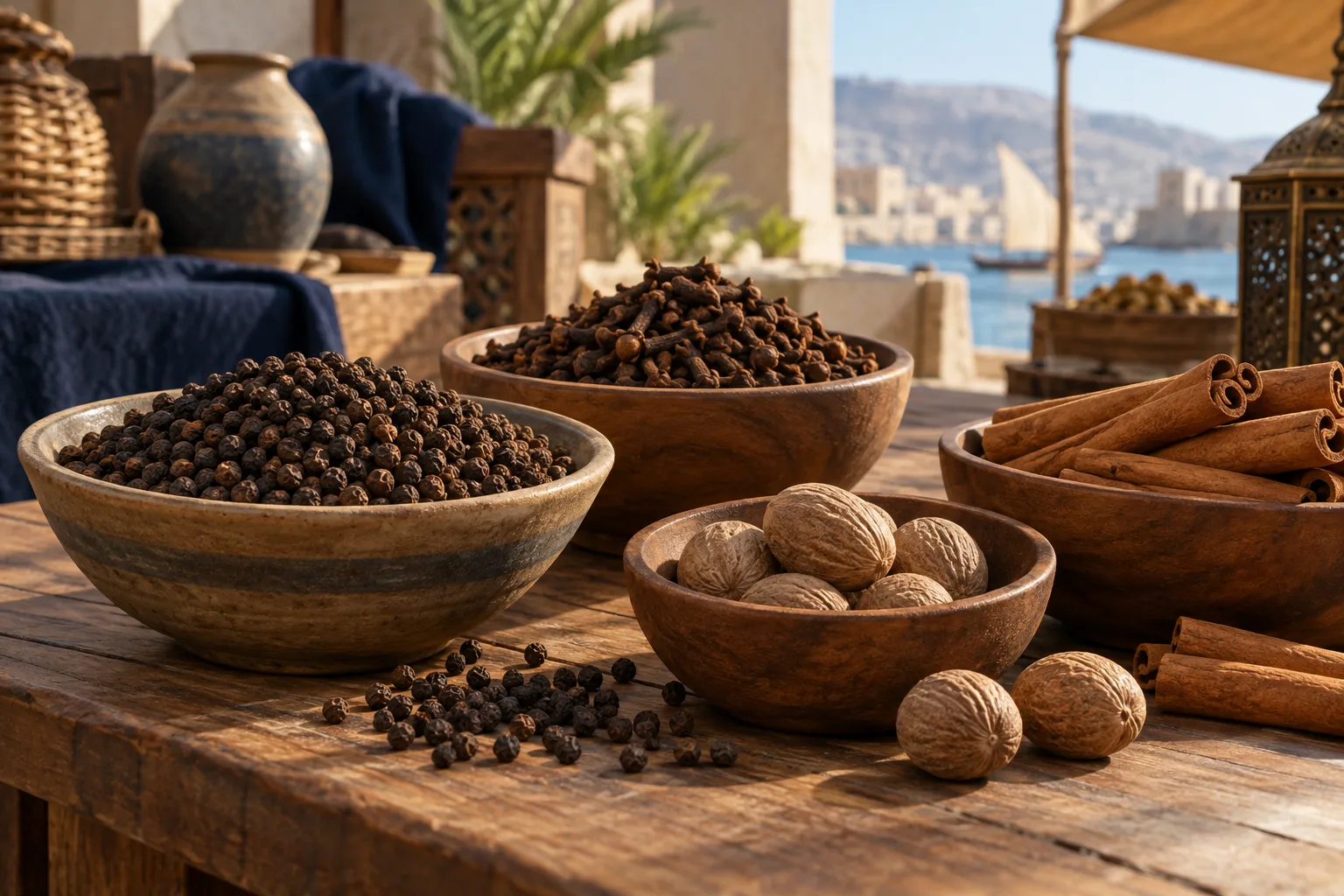
تِجَارَةُ التَّوَابِلِ عَبْرَ التَّارِيخِ
Two friends explore how the ancient and medieval spice trade shaped civilisations, drove exploration, and connected Asia, the Arab world, and Europe.

تِجَارَةُ الْمِلْحِ وَأَهَمِّيَّتُهَا التَّارِيخِيَّةُ
Two colleagues discuss how salt was once a precious commodity that drove ancient economies, funded empires, and shaped trade routes across continents.
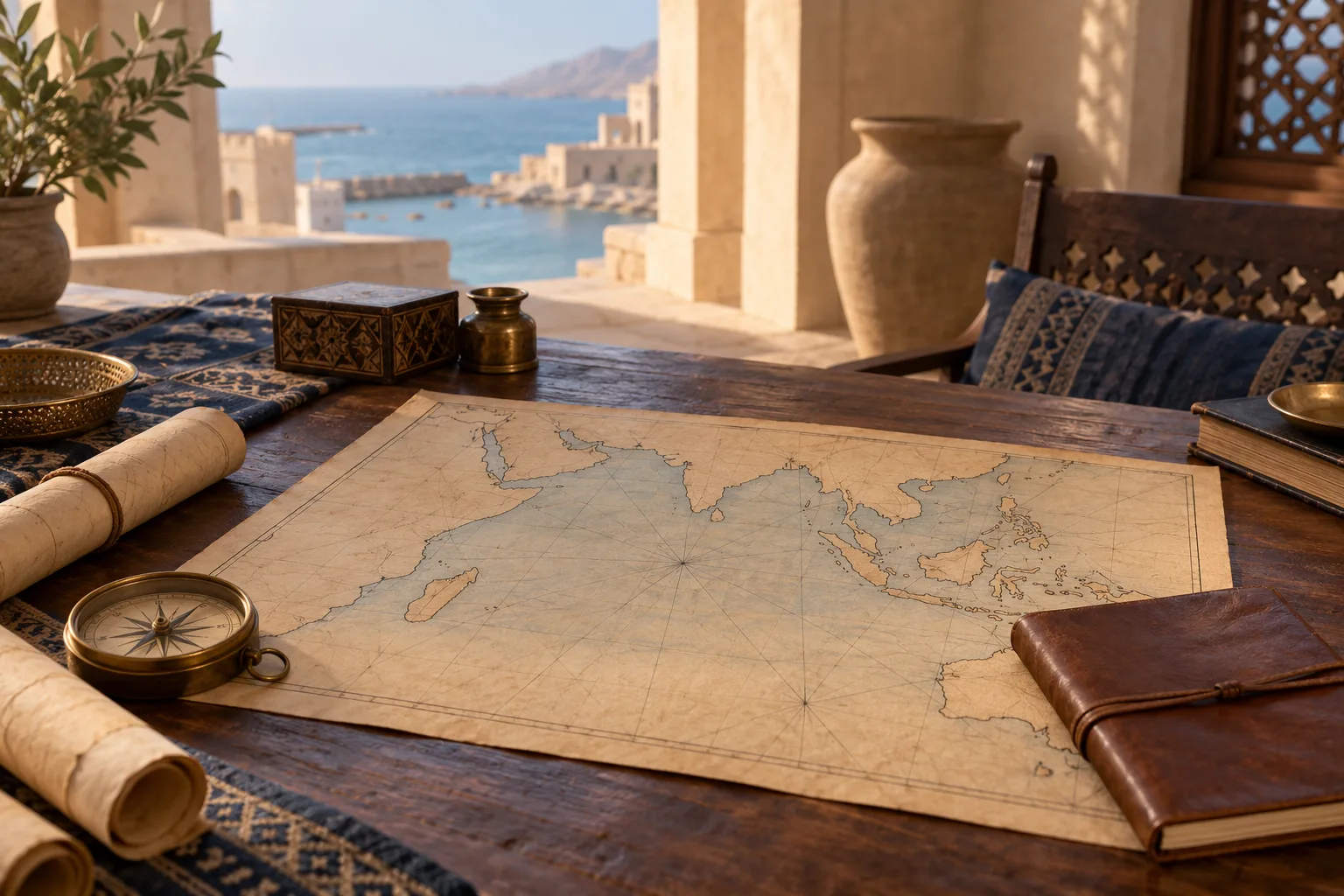
طُرُقُ التِّجَارَةِ الْبَحْرِيَّةِ الْقَدِيمَةِ
A teacher and student discuss how ancient maritime trade routes connected distant civilisations, from the Indian Ocean to the Mediterranean.

تَارِيخُ الْمَنَارَاتِ وَعِلْمِ الْمِلَاحَةِ
Two historians examine the evolution of lighthouses from ancient fire beacons to sophisticated navigational structures, and their role in maritime safety throughout history.
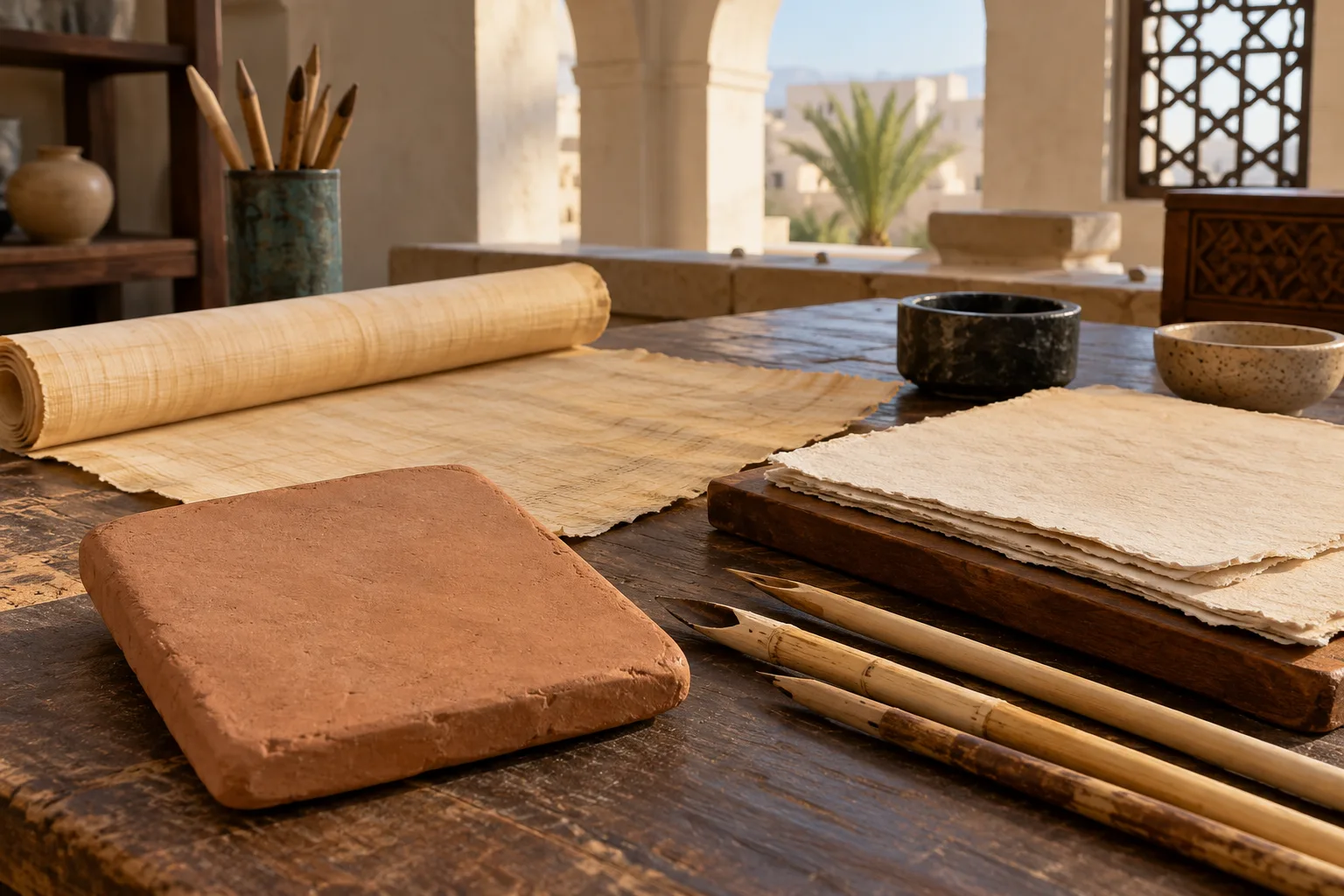
تَطَوُّرُ مَوَادِّ الْكِتَابَةِ عَبْرَ الْعُصُورِ
Two scholars trace the fascinating history of writing surfaces—from papyrus and clay tablets through vellum to paper—and how each innovation transformed the transmission of knowledge.
انْتِشَارُ الْكُتُبِ وَالْمَكْتَبَاتِ عَبْرَ التَّارِيخِ
Two academics discuss how books and libraries developed from ancient clay tablet archives to the great libraries of the Islamic Golden Age, and how they shaped the transmission of knowledge across civilisations.
تَارِيخُ الْأَوْزَانِ وَالْمَقَايِيسِ
Rashid and Zaynab chat simply about how people long ago weighed and measured things before modern tools.